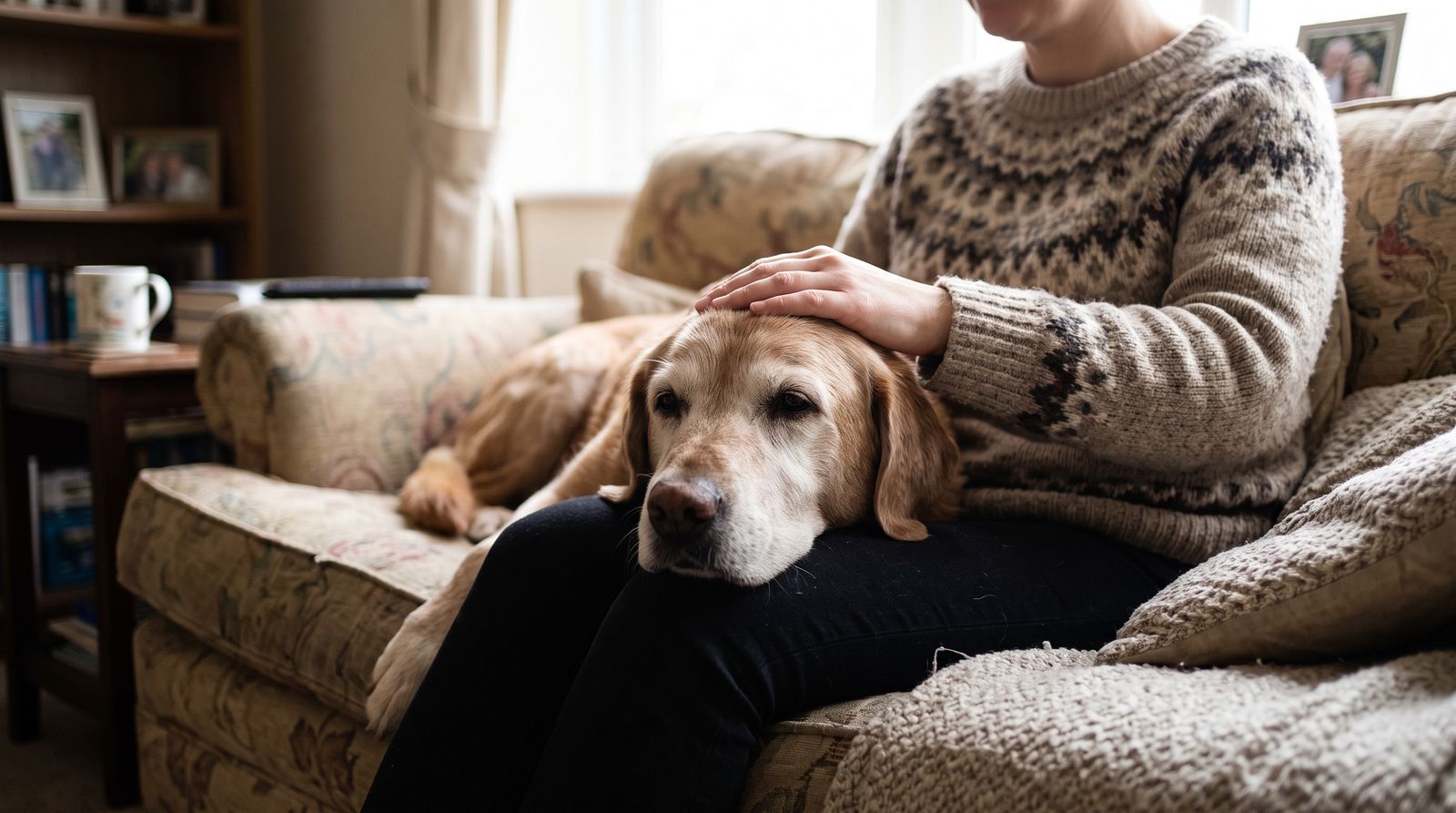
Is my pet in pain? Signs to look for in dogs and cats

Updated
Pets in pain often show it through changes in behaviour rather than crying out: a dog may be stiff, restless, reluctant on stairs or licking one spot, while a cat may hide, sleep more, stop jumping, eat less or sit hunched with squinted eyes. Never give your pet human painkillers, as some are poisonous to pets. If you notice any of these changes, ask a vet to examine your pet.
Key points
- Pain usually shows as a change in behaviour, movement or routine, not as crying.
- Cats are especially good at hiding pain, so small changes matter.
- Never give human painkillers: paracetamol is particularly toxic to cats and ibuprofen to dogs.
- Vets use validated pain scales, such as the Glasgow Composite Measure Pain Scale and the Feline Grimace Scale.
- A home visit lets Mara see how your pet moves and behaves in their normal surroundings.
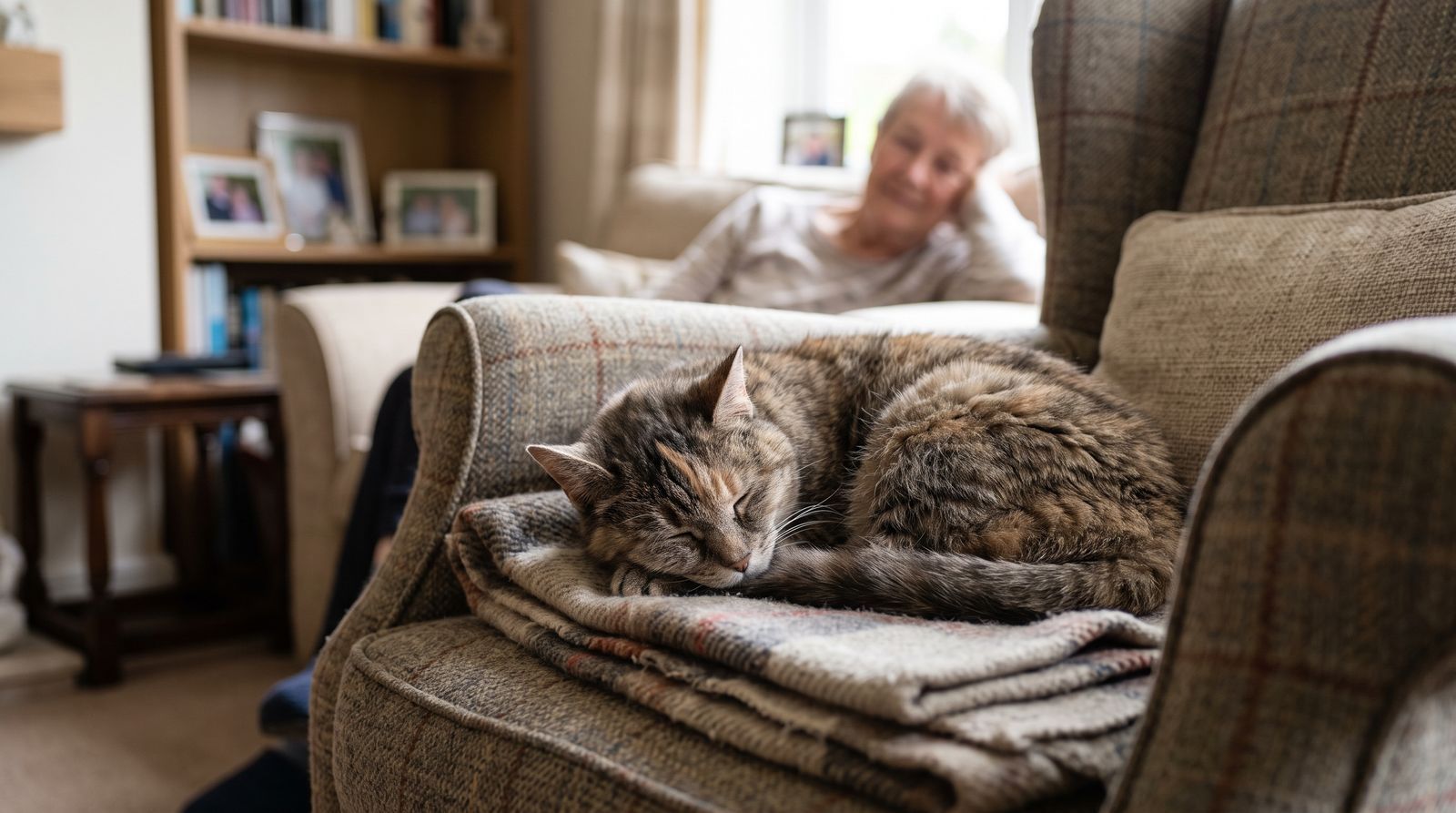
How do pets show pain?
Most pets show pain through changes in how they move, behave and go about their day, rather than by crying or yelping. Severe, sudden pain is usually obvious. Ongoing pain, from arthritis, dental disease or a long-term illness, tends to creep in slowly and is easy to mistake for old age.
The most useful question is not “is my pet crying?” but “has my pet changed?”. If they are doing less, moving differently or reacting differently to being touched, pain is one of the first things to rule out.
What are the signs of pain in dogs and cats?
Dogs and cats show pain in different ways, so it helps to know what to look for in each.
| Area | Dogs | Cats |
|---|---|---|
| Movement | Limping or holding a leg up; stiffness after resting; slow walking; reluctance to jump, use stairs or go on walks | Hesitating to jump up or down; stiffness after rest; favouring a leg on stairs; avoiding the cat flap |
| Posture | Hunched or tense; restless, unable to settle; lying very still | Crouching hunched with squinted eyes |
| Behaviour | Quieter, withdrawn or anxious; growling, snapping or flinching when touched | Hiding more; less tolerant of people; increased anxiety; pacing or restlessness |
| Grooming | Licking, rubbing or chewing at one area | Overgrooming one area, or a scruffy, matted coat from not grooming |
| Eating and sleep | Eating less; panting or trembling at rest | Eating or drinking less; sleeping more or poorly |
| Sounds | Crying or groaning | Crying, especially when moving or using the litter tray; some cats purr when in pain |
These signs are drawn from guidance by PDSA and Cats Protection, and from the behaviours vets score on recognised pain scales. Rabbits and other small pets often hide pain too; PDSA lists tooth grinding as a sign to watch for, particularly in rabbits.
Why do cats hide pain so well?
Cats are particularly good at hiding pain, and they rarely show it with an obvious limp or cry. Instead, Cats Protection explains, they are more likely to show small changes in their lifestyle or behaviour.
That means the clues are often in their routine:
- they no longer use a favourite high shelf or windowsill
- they sleep somewhere new, often lower down or out of sight
- they stop greeting you, or move away when stroked
- they avoid the litter tray or cry when using it
- their coat looks scruffy or matted
Because these changes are gradual, many owners only notice them when they look back. A quick comparison with photos or videos from a year ago can be revealing.
How do vets measure pain?
Vets use structured pain scales so that pain is assessed consistently, rather than by impression. Two well-known examples are:
- The Glasgow Composite Measure Pain Scale, developed at the University of Glasgow, which scores a dog’s posture, mobility, demeanour, vocalisation, attention to a painful area and response to gentle touch. The university describes the short form as the gold standard for assessing acute pain in dogs. A version for cats was developed by the same team.
- The Feline Grimace Scale, developed at the Université de Montréal, which scores five changes in a cat’s face: ear position, tightening around the eyes, muzzle tension, whisker position and head position. It is a validated tool for acute pain, and its creators also make it available to owners through a free app.
These scales are mainly designed for acute pain, such as after an injury or surgery. Long-term pain is assessed by combining an examination with your observations over time, which is why your notes matter.
What should I do if I think my pet is in pain?
If you think your pet is in pain, ask a vet to examine them. Pain is treatable in many cases, and early treatment can make a real difference to comfort.
In the meantime:
- keep your pet warm, quiet and comfortable, with food, water and a litter tray or toilet spot within easy reach
- avoid lifting them unless necessary, and support their whole body if you do
- write down what you have noticed, when it started and whether it is getting worse
Never give your pet human painkillers. PDSA warns that common human anti-inflammatories and painkillers, including aspirin, paracetamol and ibuprofen, can poison pets. Paracetamol is particularly toxic to cats and ibuprofen to dogs. An amount that is safe for you can seriously harm a pet, and giving a human anti-inflammatory alongside one prescribed by a vet makes harmful side effects more likely. If your pet has swallowed any human medicine, contact a vet straight away.
If your pet is in severe pain, cannot stand, is struggling to breathe or has collapsed, this is an emergency. Call us, and if we cannot be reached, see our out-of-hours page. For other warning signs, read when to call the vet urgently.
How does a home visit help assess pain?
Many pets, especially cats, hide pain even more at a vet practice, where they are frightened and on alert. At home, Mara can see how your pet gets up from their bed, manages the stairs, walks across the floor and reacts to you, which gives a more honest picture.
A home vet visit costs £90 in our standard area and lasts from 30 minutes, so there is time to watch your pet move and to go through your observations. Depending on what Mara finds, she can prescribe pain relief, take samples for lab tests, or refer your pet to our partner clinic if they need X-rays or other tests that cannot be done at home.
For older pets with a long-term condition, pain is one part of a bigger question about their quality of life. If you are wondering whether your pet is still comfortable enough to enjoy life, our guide on when it is time to say goodbye and an end-of-life consultation can help you think it through calmly.
Questions
How can I tell if my dog is in pain?
Look for limping, stiffness after rest, reluctance to jump or use stairs, slowing down on walks, restlessness, panting or trembling at rest, licking one area, and growling or flinching when touched. Any of these is worth a vet check.
How can I tell if my cat is in pain?
Cats tend to show pain quietly: hiding, sleeping more, not jumping up, eating less, a scruffy coat, being less tolerant of handling, or sitting hunched with squinted eyes. Some cats even purr when they are in pain.
Can I give my dog or cat paracetamol or ibuprofen?
No. Human painkillers can poison pets; paracetamol is particularly toxic to cats and ibuprofen to dogs. Only give pain relief that a vet has prescribed for your pet.
Is slowing down just old age?
Not always. Stiffness, sleeping more and reluctance to jump are often signs of pain, such as arthritis, that can be treated. It is worth asking a vet rather than putting the change down to age.
Sources
- Signs of pain – Cats Protection. Accessed .
- Limping and stiffness in dogs – PDSA. Accessed .
- Anti-inflammatories (NSAIDs) – PDSA. Accessed .
- Tools that assess pain in cats and dogs have changed veterinary and pharmaceutical practice – University of Glasgow. Accessed .
- Feline Grimace Scale – Université de Montréal. Accessed .
Reviewed by Mara Tudorache MRCVS on .
Mara qualified in 2011 at the University of Veterinary Medicine in Bucharest and has worked in small animal practice in Romania and across Yorkshire. She is an Official Veterinarian, and her clinical interests are internal medicine and endocrinology. She founded Mara VetCare to give pets calm, unhurried care at home.
Published